Hamstring Injuries.
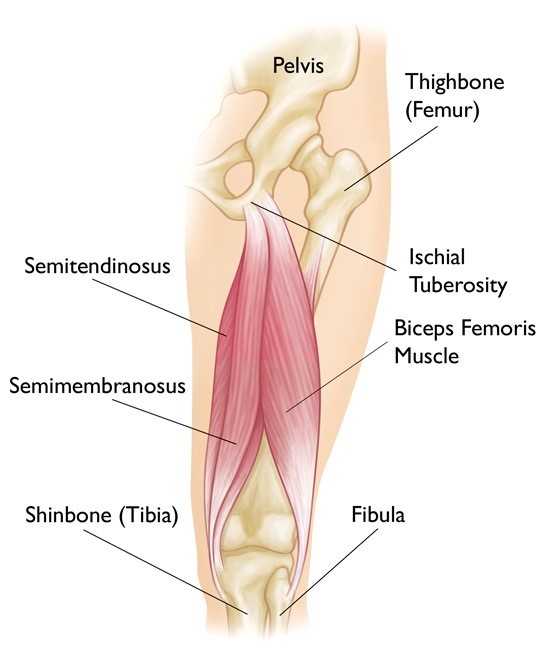
The hamstring muscles are located on the back of the thigh. They start at the bottom of the pelvis at a place called the ischial tuberosity and continue down the leg, attaching just below the knee. The hamstring muscle unit is made up of three muscles – Semitendinosus, Semimembranosus and Biceps femurs, the latter being the most frequently injured. These muscles contract to extend the leg backwards and bend the knee.
Hamstring muscle strains are the most prevalent muscle injuries reported in sport. They account for 17-30% of all injuries recorded in Rugby, Soccer, GAA, Aussie Rules and Athletics. Hamstring muscle injuries are regularly referred to as ‘heterogenous’, meaning they come in a variety of types, sizes and locations.
Hamstring injuries often result in a prolonged period of time lost from training and competition, with players missing approximately 21 games per club year. The risk of re-injury is significantly high – up to 30% in the first year of return to sport. Re-injury is usually more severe resulting in further time lost from activity.
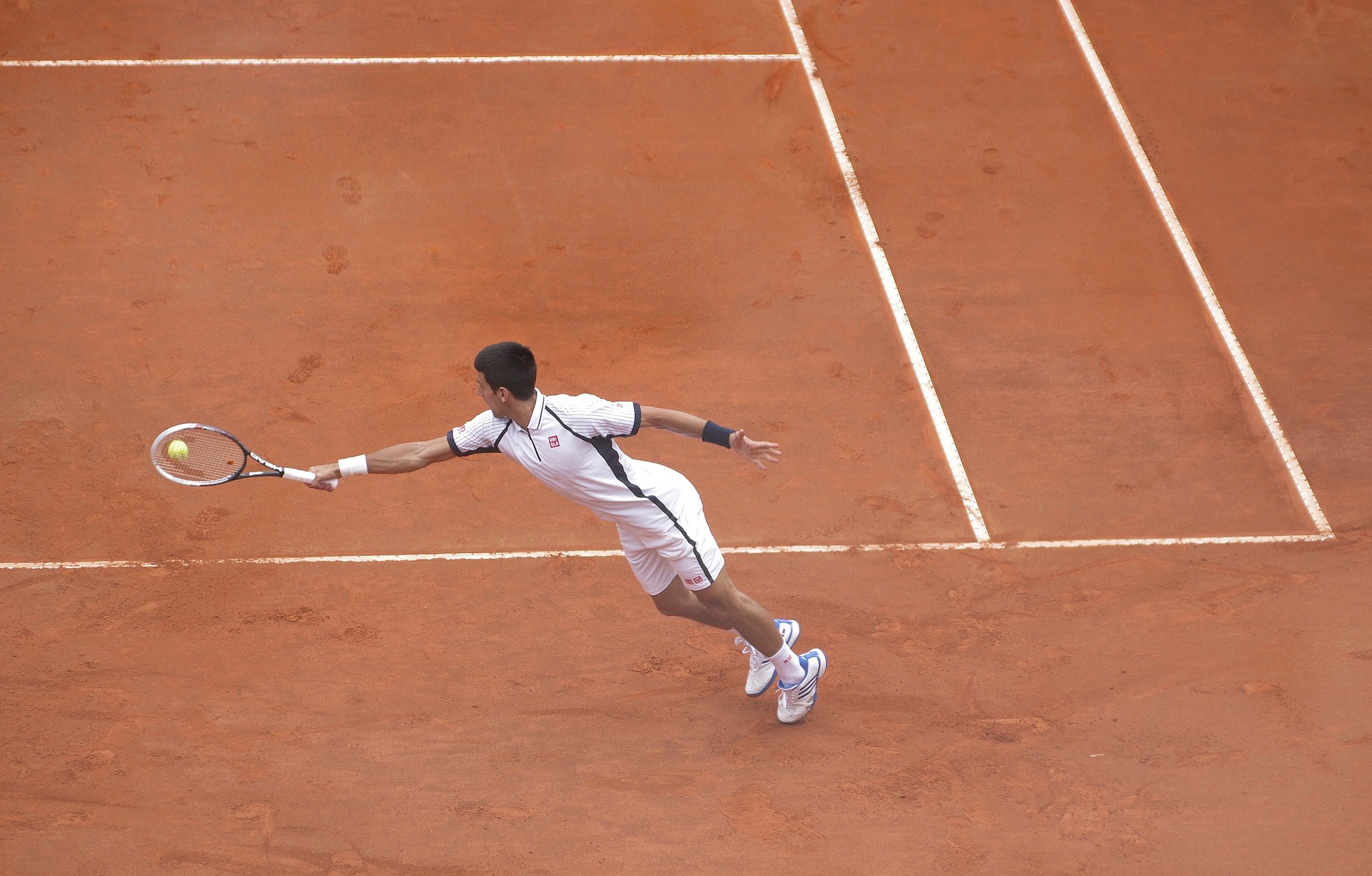
Sprinting is the most common injury mechanism for hamstring tears. The hamstring is pulled into stretch as the heel reaches to strike the ground. This is the most vulnerable position for the muscle. The aim is to absorb the force, react and contract to continue the cyclical movement. However, due to a variety of reasons the hamstring unit can fail/tear. Patients and athletes will often describe the immediate injury sensation as a sharp stabbing pain. The other common mechanisms of injury are prolonged over stretching or sudden acceleration of running.
Males over the age of 23 with a history of hamstring injury are most at risk. Research has shown that one third of athletes have a reoccurrence in the first year after injury with the high ‘risk’ period being the first 3 weeks as you return to play. Regardless of injury history, as you get older your risk of tearing a hamstring increases 30% annually! These of course are factors outside of our control but there are some factors we can change.
Hamstring weakness, fatigue and reduced flexibility are the main offenders. Imbalances in the quadriceps/hamstring relationship have been linked closely to increased injury risk, as well as strength and coordination deficits in the pelvis and trunk muscles. These factors linked with poor warm up, fatigue and a generally low fitness level leads to a recipe for disaster (injury!).
Health care professionals will often grade muscle damage into grade I (minimum), grade II (Moderate) or grade III (severe). The injury prognosis and time lost from sport correlates closely to these.
Unfortunately, the ‘wait and see’ protocol won’t help recovery with this injury. If you suspect you’ve pulled a hamstring, get it checked. The earlier a muscle is accurately diagnosed and treated, the quicker your return to sport. Early optimal loading of the muscle reduces scar tissue and encourages faster muscle recovery.
Treatment for hamstring injury involves a range of manual therapies, exercise prescription and functional specific loading (e.g running). Each rehabilitation programme is specifically designed on the needs analysis of the patient. No two hamstrings will tear or repair in the same way!
If you would like a full assessment on a hamstring injury, please contact us or book online to see one of our chartered physiotherapists.