
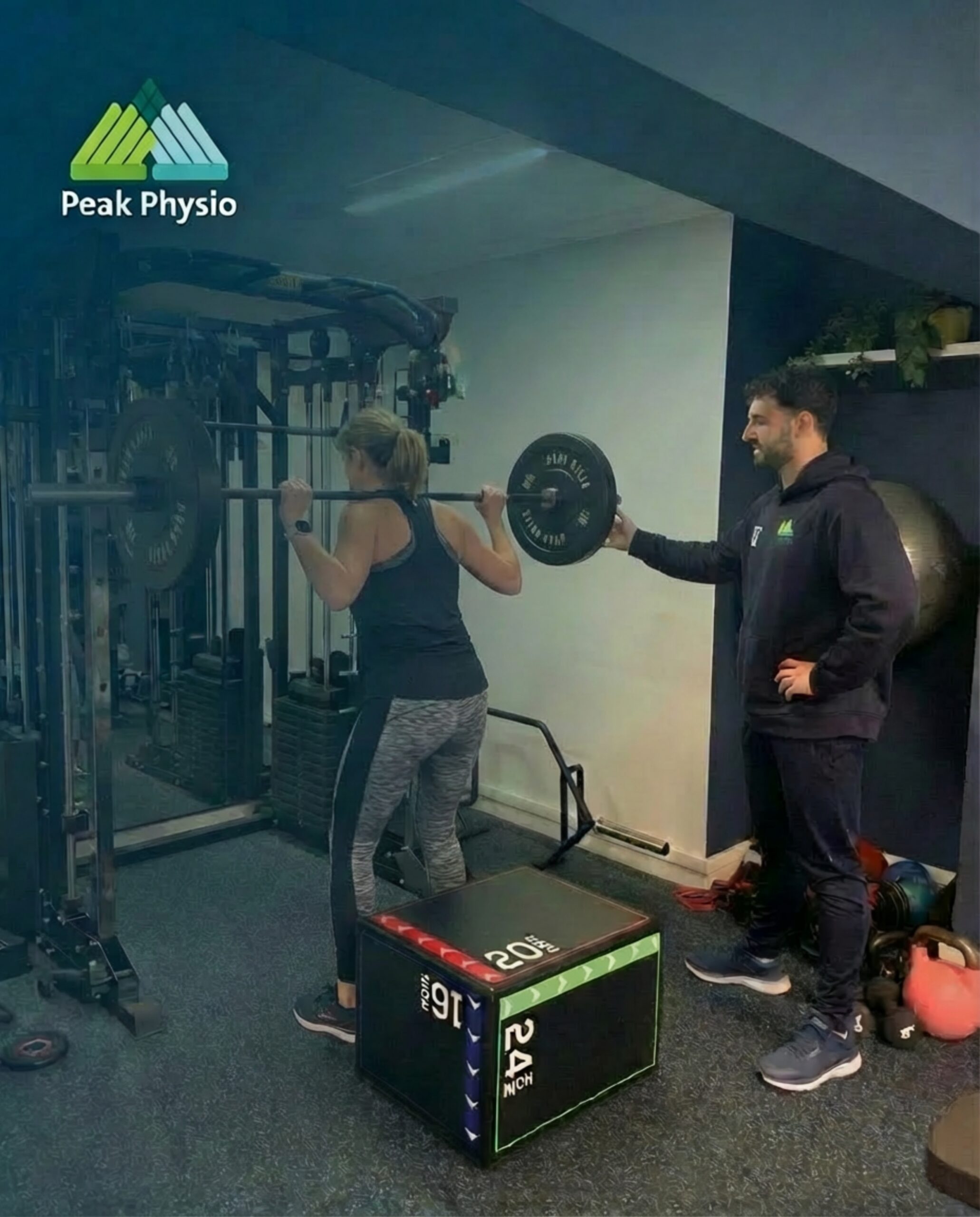
An estimated 300,000 people in Ireland are living with osteoporosis, and many more are in the early stages without knowing it. Three in four adults over 50 are affected by low bone density in some form.
Most people first hear the word after a fracture. It doesn’t have to go that way. Around 80% of these fractures are preventable, and bone responds to what you ask of it at any age.
Being careful is not the answer
The instinct after a diagnosis is to be careful: lighter weights, gentler movement, avoid anything that feels risky. That’s the opposite of what bone needs. Bone is living tissue, and it gets stronger in response to real load. Walking and swimming are great for your heart, but neither asks enough of your skeleton to change bone density.
Done properly, with a programme built around what your body can safely handle, strength training is one of the few things proven to slow bone loss and improve balance. And balance matters just as much, because a fracture needs a fall before it needs weak bone.
Our Osteoporosis & Osteopenia Clinic
Led by Dan Delchev, our bone health specialist, the programme starts with a 45-minute one-to-one consultation: a full review of your history and goals, clear education on managing bone health safely, a walkthrough of the gym, and a plan to work from. If you’ve had a DEXA scan, we’ll go through your results with you. If you haven’t, we’ll advise you on getting one and use our own body composition testing in the meantime.
No referral needed, and no diagnosis needed either. Plenty of people come to us simply because bone health runs in the family.
€49 initial consultation
A 45-minute one-off session, with no obligation to continue. Claimable through VHI, Laya, Irish Life Health and GloHealth, and eligible for tax relief under Med 1.
What the LIFTMOR trial found
Researchers at Griffith University put postmenopausal women with low bone mass through high-intensity resistance and impact training: squats, deadlifts and overhead presses, properly supervised. Over the trial they recorded:
- A 3.2% improvement in bone density at the lumbar spine
- A 1.6% improvement at the femoral neck, the top of the hip
- Measurable gains in strength and functional balance
- No serious adverse events
Our bone health programme is built on this protocol. The key word is supervised: the trial worked because the loading was progressive and the technique was coached.
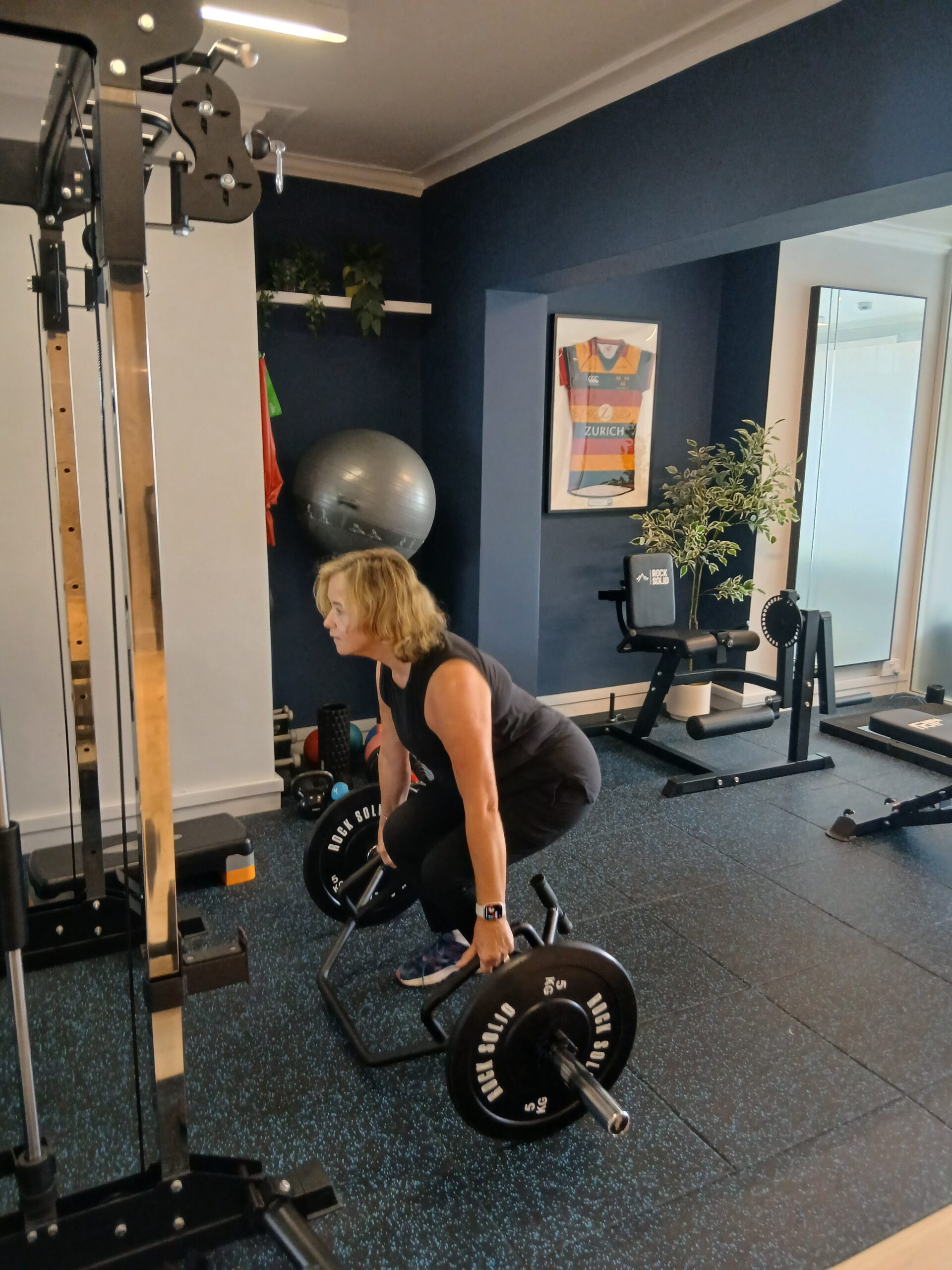
Try this one at home: sit-to-stand, holding a weight
- Sit tall at the front of a sturdy chair, feet flat and hip-width apart.
- Hold a weight at your chest: a dumbbell, a kettlebell, or a bag of sugar to start.
- Stand up without using your hands, keeping your chest upright rather than rounding forward.
- Lower slowly back down. Do 3 sets of 8 to 10.
This is the everyday movement that keeps you independent, and loading it trains the hip and spine together. When 10 reps feel comfortable, add weight rather than reps. That added load is the part that counts.
Something bothering you?
Book online, or call us on (01) 667 0111. We’re in Ballsbridge and Trim.