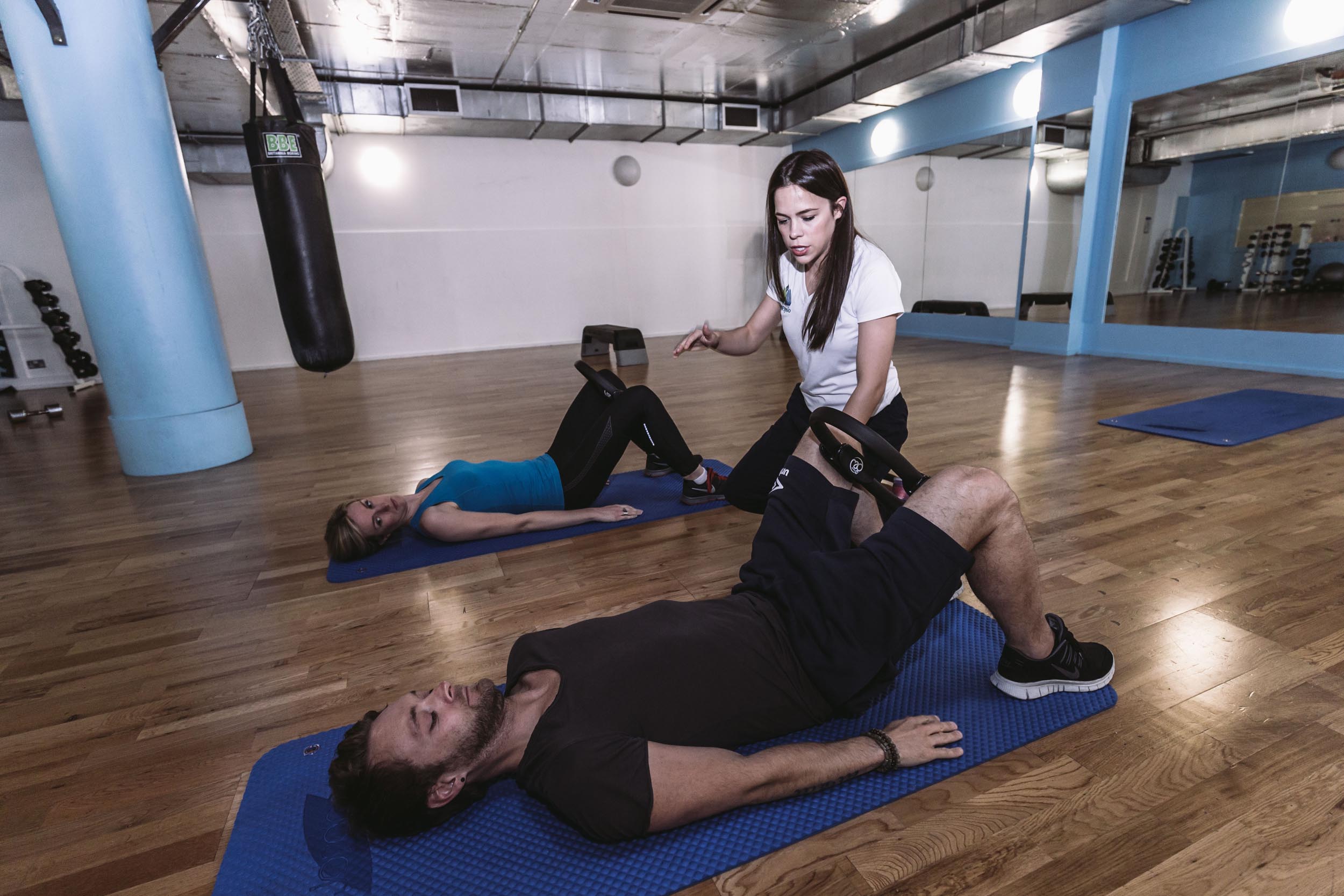
Starting a pilates class and unsure what to expect? Here at Peak Physio, all our classes are run by a chartered physiotherapist. If you are new to our clinic or pilates, we carry out a Free 15 min ‘Pre-Pilates Screening’. This enables the physiotherapist to provide a baseline and education on pilates before beginning the class.
Here are 5 key elements to think about when you are in a pilates class, and in general from day-to-day!
- Lateral Breathing
Aim to breathe in wide and full into the sides and back of your ribcage. Aim to synchronize your exhale with the part of the activity that is most exerting e.g. bringing you leg into table top.
- Centering
This refers to the position of your pelvis in ‘neutral’ (setting the centre) and engaging your ‘centre’.
Begin lying on your back with your knees bent, your feet shoulder width apart and your arms by your side.
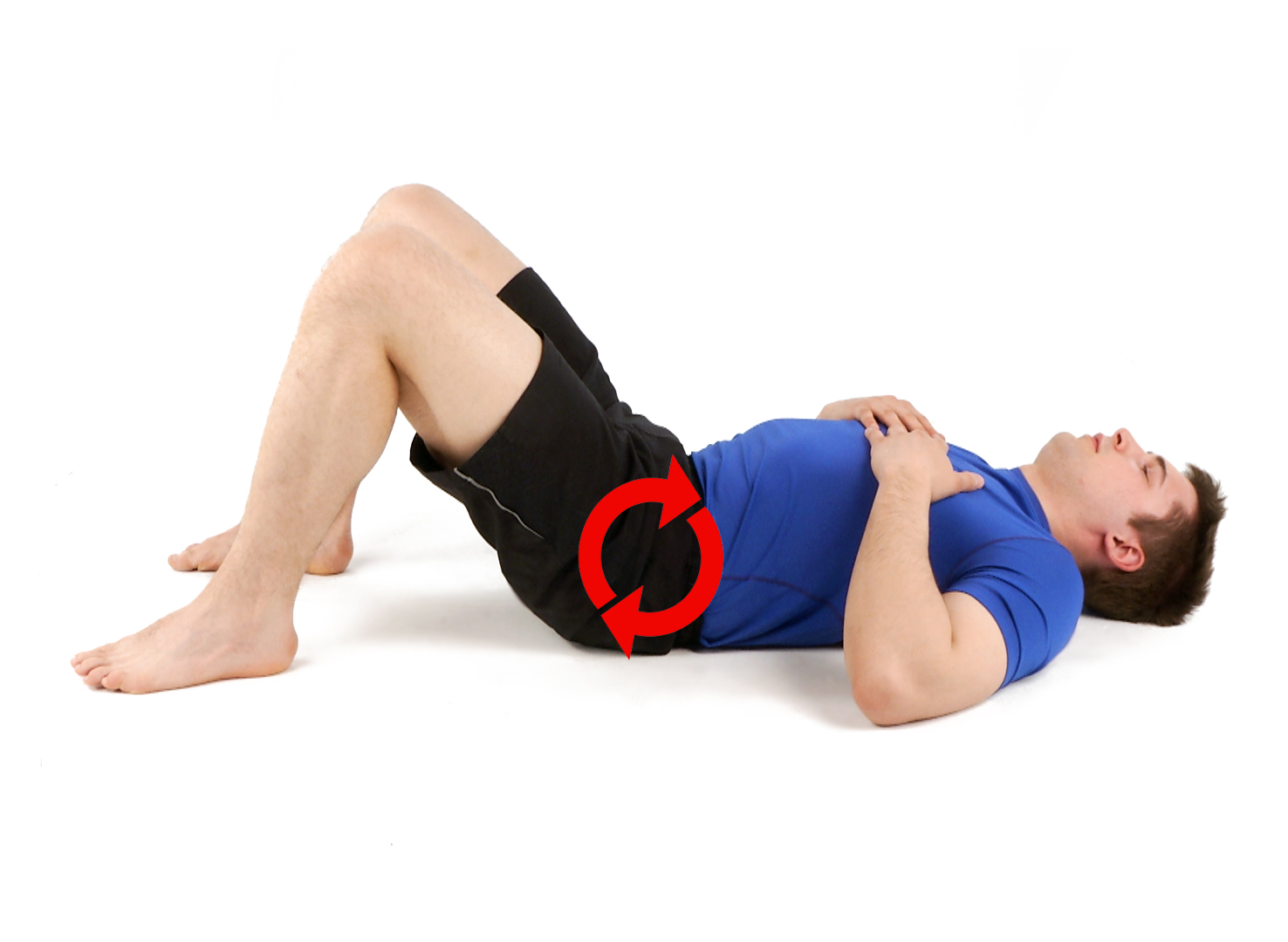
To find neutral
- tilt your pelvis forwards and backwards without moving your ribs, so your lower back arches fully and then flattens fully
- Then try to maintain a pelvic and lower back position half way between these two extremes (i.e. a slight curve in the lower back)
- This is neutral spine for the lower back and pelvis.
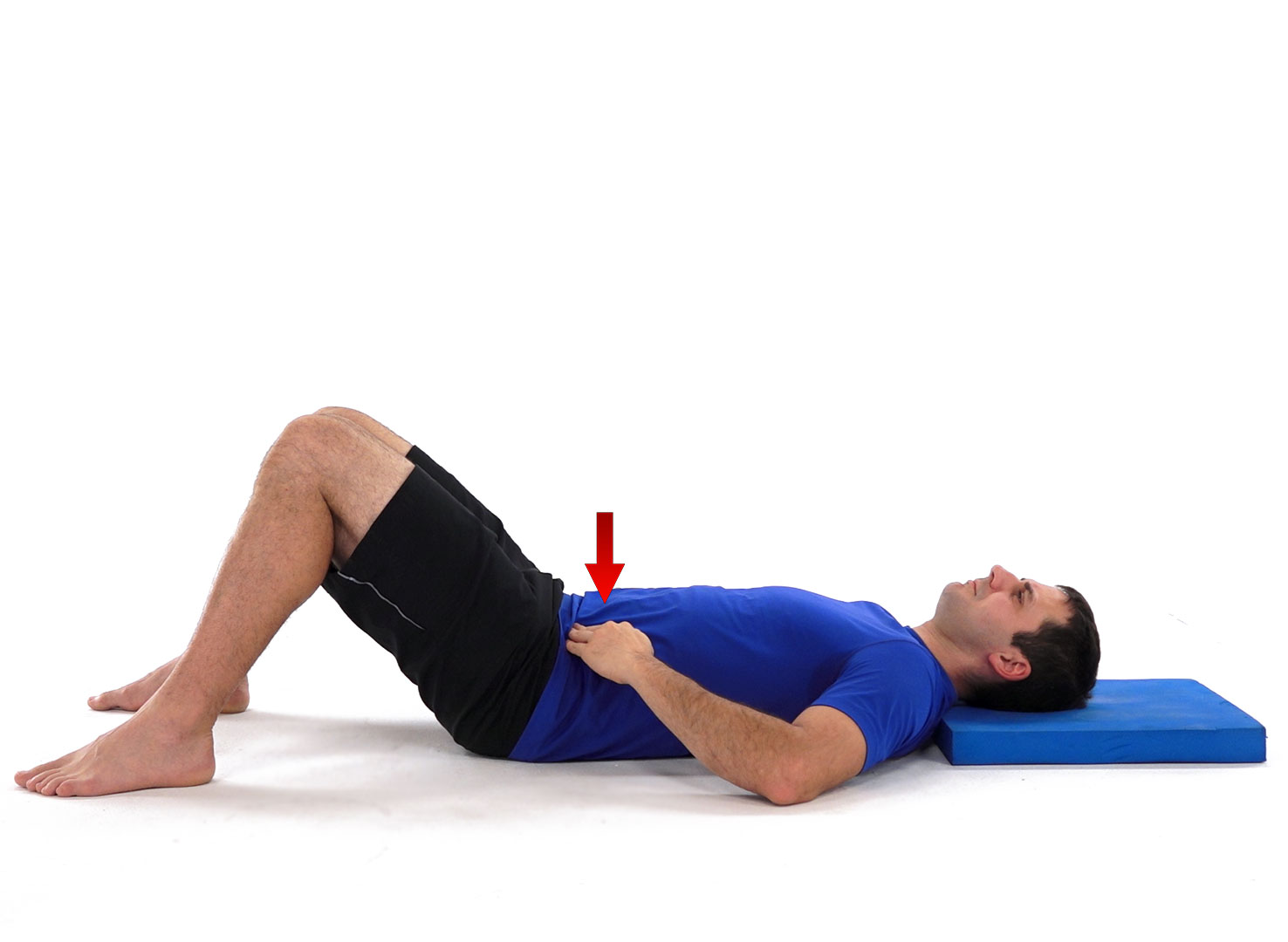
Your ‘centre’ refers to the local muscular system, the diaphragm, lumbar multifidus, transversus abdominis and pelvic floor muscles.
- Begin lying on your back in neutral spine (as above)
- Slowly draw the section of your abdomen situated below your belly button upwards and inwards “away from your belt line, towards your spine”
- Breathe normally
- Your rib cage should remain relaxed and should not elevate during this process. Imagine a line going from your sternum to your belly button.
- You should be able to feel the muscle contracting if you press deeply 2cm in from the bony prominence at the front of your pelvis.
- Hold this muscle at 20 – 30% of a maximal contraction.
Aim for slow, gentle continuous activation- remember it’s a marathon, not a sprint.
Avoid unwanted outer core muscle activity i.e. ‘doming’.
Practice often throughout the day.
- Ribcage placement
For optimal spinal alignment, the ribcage should be positioned directly over the pelvis when looking at the body from the side in sitting and standing (see picture below)
- Shoulder Blade placement
Set the shoulders on the shoulder blades by widening your collarbone. You should feel the blades draw downwards on your ribcage. Try engage between your shoulder blades at the 20-30% level. Make sure your shoulders are not rising up towards your ears.
- Head and Neck placement
Maintain the natural curve of the neck and imagine the head is being lifted up towards the ceiling with a piece of string.
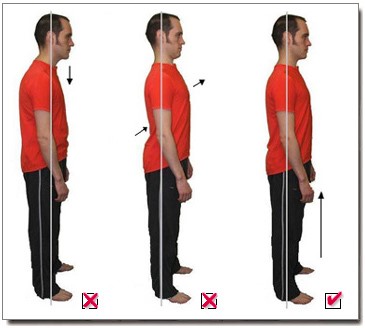
If you unsure whether you are doing this correctly, always check with your pilates teacher or physiotherapist. If you are interested in learning more about our pilates classes have a read here and check out our timetable. If you are interested in joining our classes, don’t hesitate to contact us to book in for your free 15 minute ‘Pre-Pilates’ screening.
References:
APPI 5 Key Elements