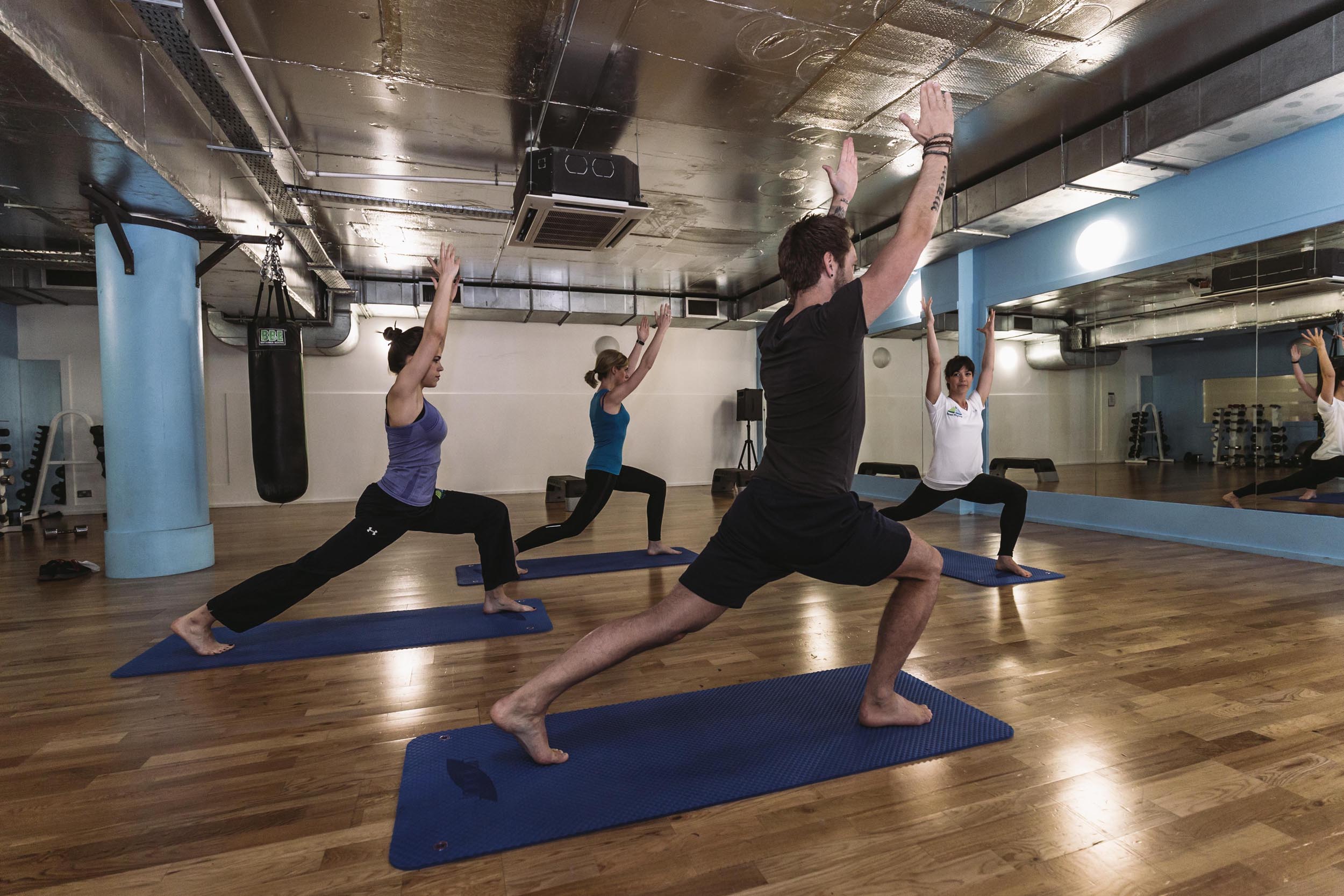
This is one of the most common thoughts when considering trying out yoga classes and one of the most untrue. If your flexibility is lacking, then you’re exactly the person who SHOULD be doing yoga. The ability to contort yourself into wild and wonderful postures is not a pre-requisite for either participating in or enjoying a yoga class. In fact, contrary to popular belief, complicated, twisty, and extreme postures are not the majority in yoga. Yoga is for everyone, and everyone can do it.
Yoga is a practice. It is not a sport, it is not a performance. You do not need to be “good at it” to enjoy and benefit from a class. Any day you show up to a yoga class, you arrive with a different body to the one which may have shown up the week before. Maybe you’re tight after a long run, maybe you’re stiff after a long work week, maybe you’re frazzled and stressed after running around after family, maybe you’re not even sure what you are because it’s been so long since you’ve done anything specifically for your body. You can still do yoga. It’s considered a practice because with every class, you’re working on something your body needs. Flexibility, strength, focus. You’re building on that in every class no matter what your body looks like, how deep you can move into a posture, or how long you can hold it for.
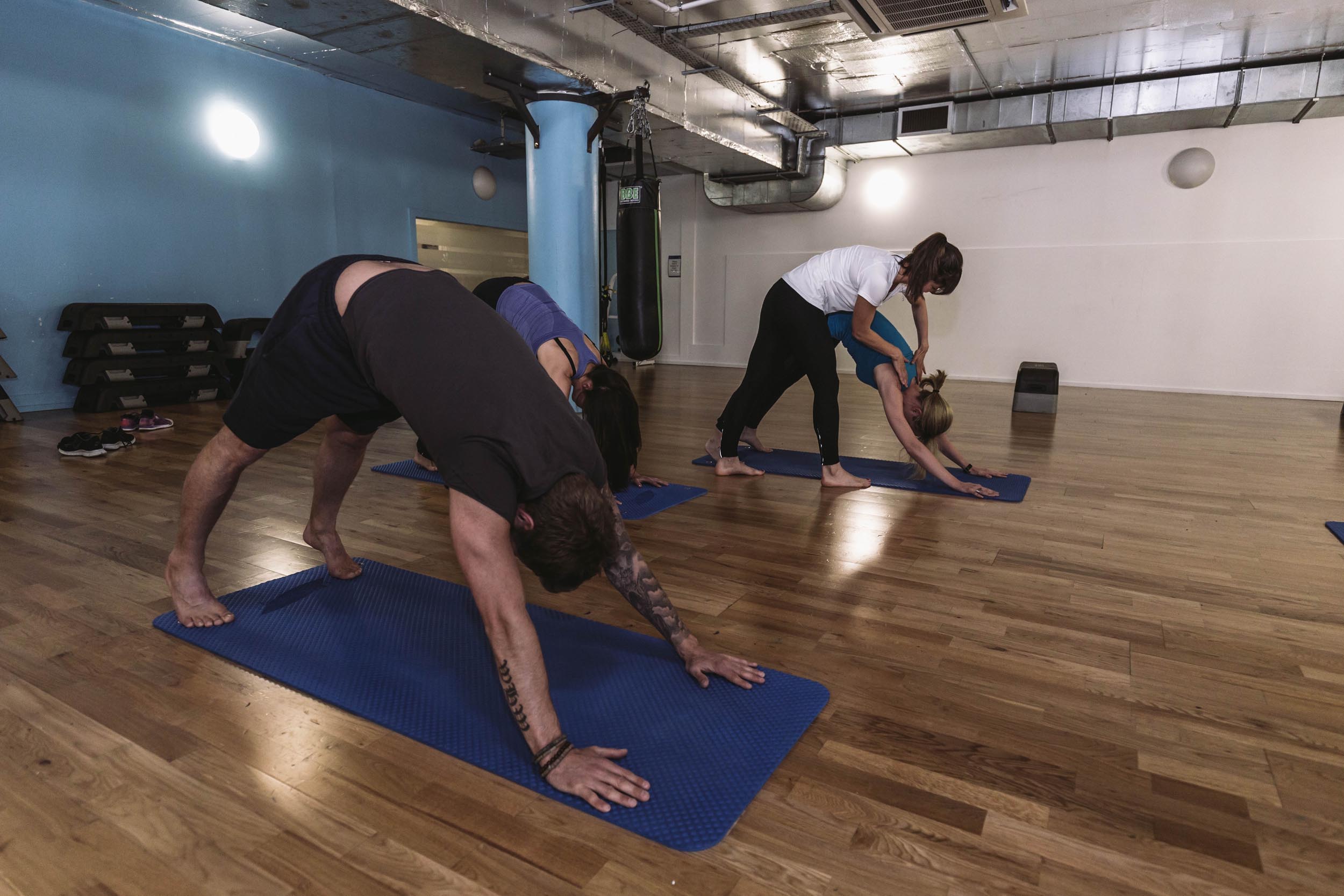
A good yoga class can be adapted to the body that shows up to class. There are large amounts of strong research which shows that yoga is beneficial when recovering from many types of medical conditions. Conditions which affect the musculoskeletal system of the body are of course a key interest to those studying exercise therapy, and there is good evidence to recommend yoga as a recovery method from low back pain. Heart conditions like hypertension and arrhythmia, lung conditions like asthma, and psychological conditions like depression have also been shown to benefit from yoga. It has been found to assist with symptoms of fatigue in patients with breast cancer and multiple sclerosis.
Yoga is a way to give back to your body, alleviate stress and improve focus and cognitive function. It has grown in popularity in recent decades as a compliment and addition to our mostly sedentary and desk-based life style, sporting activities, and gym-based workouts. All of these can put strain on the body in different ways and restrict joint mobility, muscle length, muscle strength, and muscle balance. Yoga has been found to improve these physiological measures, in both clinical and non-clinical populations.
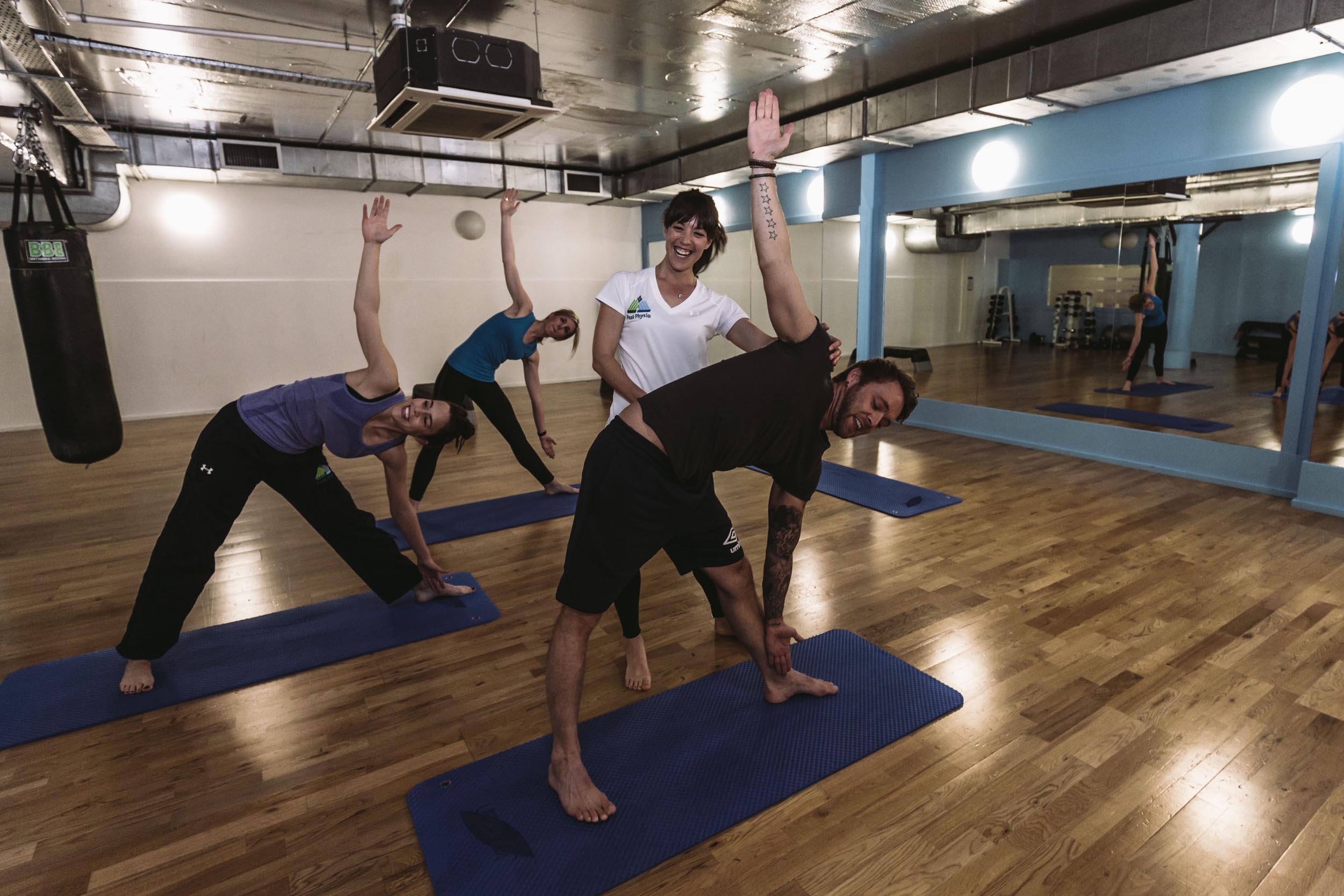
If you have any questions about our yoga classes, please contact us or have a look at our class times.