
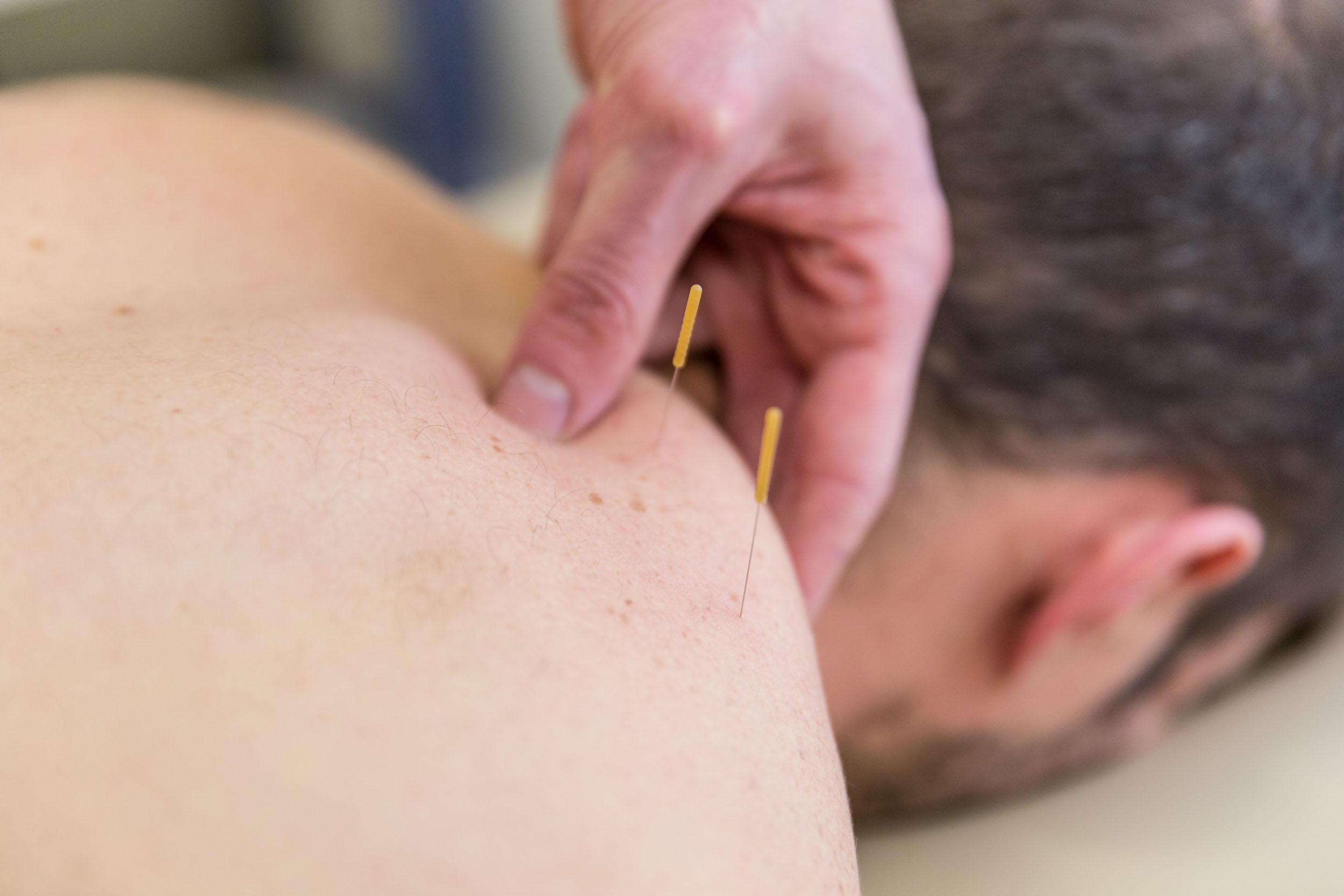
What is Dry Needling?
Myofascial trigger point dry needling is a technique used to release myofascial trigger points. It involves the insertion of sterile single use acupuncture needles into the muscle to target a trigger point. This causes a local twitch response, the muscle contracts and relaxes. This causes a chemical response which helps to inhibit the pain/inflammatory cycle.
What is a myofascial trigger point?
A myofascial trigger point is a hyperirritable spot in a taut band of muscle. It can be painful on compression and often causes referred pain into another part of the body- this is referred to as an ‘active’ trigger point.
How do myofascial trigger points occur?
- Repetitive overuse or sustained loading of muscles
- Habitually poor posture
- Muscle clenching and tensing
- Direct injury such as a blow, strain, break, twist or tear.
- Inactivity such a prolonged bed rest or sitting
Is it sore?
Often the affected area can be achey for 24-36 hours post treatment as the muscle continues to relax.
Benefits of dry needling
- Decreased muscle spasm and improved range of motion
- Reduced pain
- Improve recruitment and activation of appropriate muscles
- Promote local flow of blood to the injured area for healing.
How is dry needling different from acupuncture?
The technique involved with dry needling is inserting an acupuncture needle into the trigger point in the muscle.This is in comparison to the Traditional Chinese Medicine Acupuncture which is based on inserting the needles into specific points in the body to allow the free flow of energy (known as “Qi”) through the body.
Dry needling vs manual therapy
Dry needling allows a therapist easier access to trigger points which are located in deep muscles. However, some of the effects of dry needling can be achieved through hands-on therapy by the practitioner.
Both of these treatments have beneficial effects on pain and joint range of motion. Your physiotherapist will decide which they feel will be more beneficial.
Are there any reasons I shouldn’t have dry needling?
There are certain contraindications to treatment according to the ISCP guidelines including but not limited to:
- compromised immune system
- vascular disease
- diabetes
- pregnancy
- epilepsy
- allergies to metal
- certain medication e.g. blood thinning agent
Your chartered physiotherapist will talk about the contraindications with you and will be able to answer any queries or concerns you might have.
For more information, feel free to contact us or book online to see one of our chartered physiotherapists.
Laura O’Sullivan
BSc Physiotherapy
References
ISCP Guidelines for Dry Needling 2012